Do Jamaica Weddings Need Permits? What Couples Need
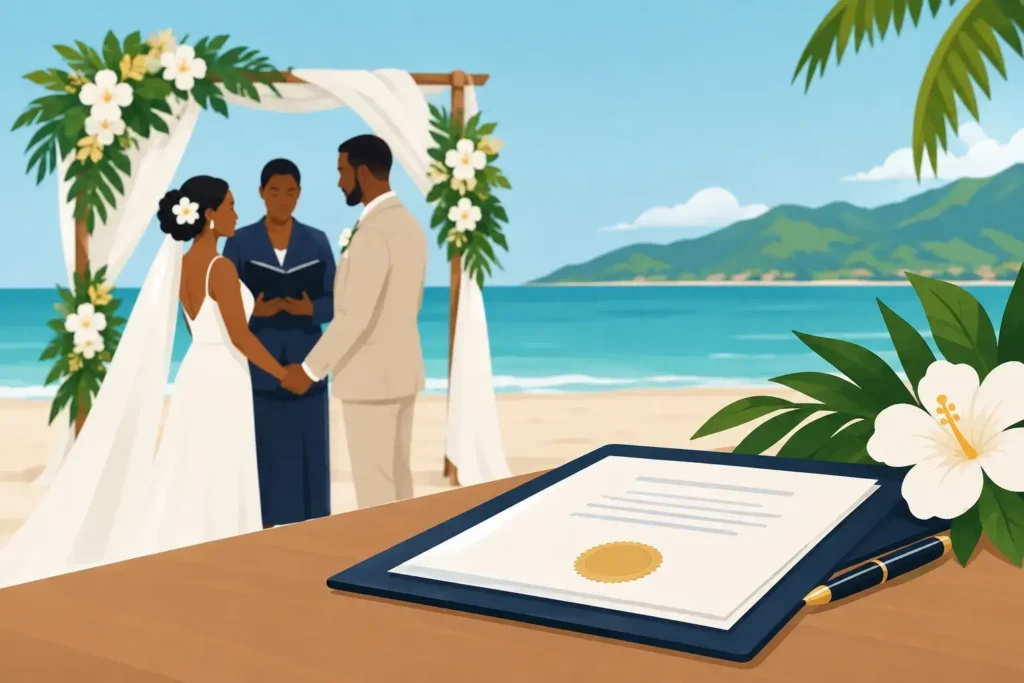
A Caribbean Sea backdrop, warm evening light, and your closest people gathered on a private terrace can make planning feel wonderfully simple. Still, couples often ask, “do Jamaica weddings need permits?” The short answer is that your legal marriage requires a Jamaican marriage license, while additional permits depend on where and how you celebrate.
For most destination weddings at a private, professionally operated venue, the process is far less complicated than it sounds. The key is knowing the difference between the documents that make your marriage legal and the approvals that may apply to a public beach ceremony, drone footage, fireworks, or other special plans.
Do Jamaica Weddings Need Permits for a Legal Ceremony?
A wedding in Jamaica does not generally require a separate “wedding permit” in the way a large public event might. What you do need is a valid Jamaican marriage license and an authorized marriage officer to perform the ceremony.
This is the legal foundation of your day. Couples traveling from the United States or elsewhere can marry in Jamaica without establishing residency first, which is one reason the island remains such a beloved destination-wedding choice. The license is typically arranged before the wedding, and experienced planners can help make sure the application is submitted correctly and on time.
Your marriage officer will guide the legal ceremony and complete the required registration process. Afterward, you can request your official marriage certificate for use at home. Because document procedures and processing times can change, it is wise to confirm current requirements early in your planning timeline rather than treating legal paperwork as a last-minute task.
Documents couples are commonly asked to provide
Most couples should expect to provide clear copies of their passports and birth certificates, along with relevant documents that reflect their marital status. If either partner was previously married, certified divorce or death documents are generally required. Documents not written in English may need certified translations.
The exact documentation can vary based on your circumstances, including name changes, previous marriages, or the country that issued your records. This is where personalized coordination makes a real difference. A small detail on a document should not become the reason a dream destination wedding feels stressful.
Private Venue Weddings Versus Public Locations
The location of your ceremony has the greatest effect on whether extra permits are needed.
At a private venue, the property team typically manages the operational permissions connected to hosting events there. That can include site use, staffing, sound considerations, vendor access, food and beverage service, and the setup that turns an elegant space into a celebration built around your vision. You still need your marriage license and marriage officer, but you are not usually responsible for securing a public-space permit simply to exchange vows on private grounds.
A public beach, park, waterfront promenade, or other government-managed location is different. These spaces may require permission from the relevant authority, particularly when you are bringing chairs, arches, décor, music equipment, or a sizable group. Public locations can be beautiful, but they also come with variables: other visitors, weather exposure, access restrictions, cleanup requirements, and less privacy for your ceremony.
For couples who want the visual romance of the coast without the uncertainty of a public beach, a private property with sea views can offer a more relaxed alternative. Your guests can arrive comfortably, the ceremony can remain uninterrupted, and the reception can flow naturally into cocktails, dinner, and dancing.
When Extra Jamaica Wedding Permits May Apply
Not every wedding needs extra approvals, but certain experiences deserve advance planning. Your venue or coordinator should identify these early, especially if your vision extends beyond a standard private ceremony and reception.
You may need additional permission if you are planning any of the following:
A ceremony or reception on a public beach, in a public park, or at another public siteProfessional drone photography or videography, particularly near airports or in controlled airspaceFireworks, pyrotechnics, sky lanterns, or other special effectsA major production setup involving road access, oversized equipment, or extensive temporary structuresAmplified music or entertainment that may be subject to local noise restrictions
A drone is a particularly common question in Montego Bay because of the area’s proximity to Sangster International Airport. Aerial images can be breathtaking, but no photographer should fly simply because the view is beautiful. Airspace rules, weather, venue policies, and safety requirements all matter. Ask your photographer whether they have the proper local authorization and a realistic backup plan for ground-based coverage.
Fireworks and other special effects also require more than a quick yes from a vendor. They can involve safety clearances, venue restrictions, fire precautions, and weather considerations. Sometimes an elegant sparkler exit, live percussion performance, or beautifully lit dance floor creates the same sense of occasion with fewer moving parts.
What Your Wedding Venue Should Handle
A destination wedding should feel personal, not like a second full-time job. Before you book, ask exactly what your venue and planning team will coordinate on your behalf.
For a private wedding property, that support may include confirming whether your guest count suits the space, organizing vendor arrival times, arranging rentals and décor, coordinating caterers and bar service, planning transportation, and building a weather contingency. If an approval is needed for one of your plans, your team should be clear about who will obtain it, what it costs, and when it must be finalized.
At The Palm Terrace, couples have the benefit of a one-wedding-at-a-time experience, allowing the team to focus fully on the details of one celebration. From a ceremony overlooking the Caribbean Sea to guest transfers and island outings, thoughtful coordination helps keep the experience warm, polished, and refreshingly straightforward.
Transparency matters here. A package that looks simple but leaves you to discover permit costs, vendor restrictions, or transportation gaps later is not truly simple. Ask for clear guidance before you make decisions around entertainment, photography, guest excursions, or an off-site ceremony location.
A Simple Planning Timeline for Paperwork and Approvals
Begin your legal paperwork as soon as you choose a date and venue. This gives you time to gather replacement records if needed and to resolve any questions about prior-marriage documents, translations, or names that differ across records.
Once you have selected your ceremony setting, share your complete wish list with your planner. Mention the drone before booking the videographer. Mention the fireworks before finalizing your reception timeline. Mention the beach ceremony before sending guests an itinerary. Early conversations are the easiest way to protect both your budget and your vision.
As the wedding approaches, keep digital and printed copies of your important documents organized in one place. Confirm when you will meet the marriage officer, what identification you should bring, and how you will receive your official certificate after the ceremony. Your planner can also help ensure your vendors understand the schedule, access points, and setup rules for the property.
Questions Worth Asking Before You Book
A few direct questions can prevent most permit-related surprises. Ask whether the ceremony location is private or public, whether the venue has any restrictions on music, décor, candles, drones, or special effects, and whether the team will coordinate the marriage license process. If an outside vendor is involved, ask who verifies their local permissions and insurance.
Also ask about the weather plan. Jamaica offers glorious sunshine, but tropical weather can move quickly. A venue with modern indoor spaces and covered or flexible outdoor options lets you protect the feeling of the day without sacrificing its beauty.
The right setting lets you focus less on forms and contingencies and more on the moment you see your partner waiting for you. With your marriage license properly arranged and any location-specific approvals handled early, your Jamaica wedding can feel exactly as it should: joyful, beautifully personal, and easy for every guest to enjoy.