Buffet Versus Plated Reception: Which Fits?
Your reception meal is more than a menu decision. It shapes the pace of the evening, the way guests connect, and whether your celebration feels like a polished dinner party or a relaxed island gathering. When weighing a buffet versus plated reception, the right answer depends on the experience you want your guests to remember as much as the food itself.
At a destination wedding, that choice also affects practical details: when guests arrive from the beach or pool, how formal the attire feels, how long dinner lasts, and how easily your planning team can accommodate different dietary needs. Both styles can be beautiful. The best fit is the one that reflects your love story, your guest list, and the atmosphere you want to create.
Buffet Versus Plated Reception: The Real Difference
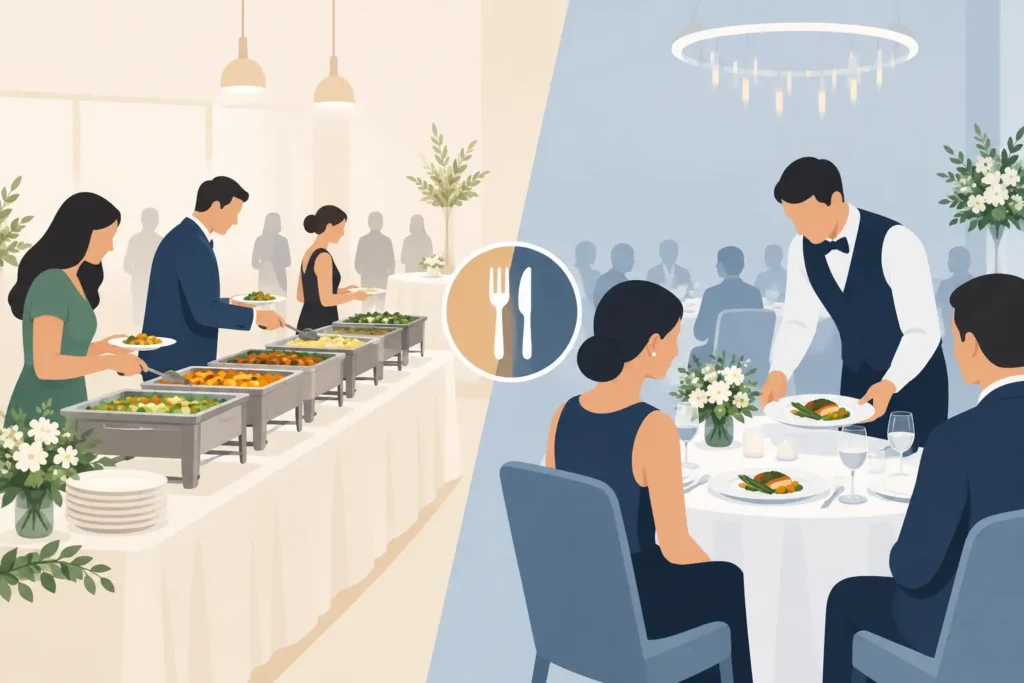
A plated reception follows a more traditional dining format. Guests are seated, select their entrée in advance or receive a pre-set course, and servers bring each course to the table. The experience is intentional and elegant, with a shared rhythm from welcome toast through dessert.
A buffet reception invites guests to choose from a displayed selection of dishes, usually moving through food stations or a central buffet line. It feels more interactive and flexible, especially when the menu features the bright flavors of Jamaica alongside familiar favorites for traveling guests.
Neither style is automatically more luxurious. Thoughtful presentation, attentive service, fresh food, and a well-paced evening matter more than the format alone. A buffet can feel elevated with chef-attended stations and beautifully styled displays. A plated meal can feel warm and lively when the menu celebrates local ingredients and the tables encourage conversation.
When a Plated Dinner Is the Right Choice
A plated dinner often suits couples who picture a refined, formal reception. There is something special about seeing every guest seated beneath soft lighting, Caribbean Sea views in the distance, and a carefully timed meal arriving at the table. It creates a sense of occasion without asking guests to make another decision after a day of travel and celebration.
It gives the evening a graceful pace
Because everyone is served at roughly the same time, plated service can make the reception feel organized and unhurried. Toasts, first dances, and special family moments can be planned around dinner with fewer interruptions. This is especially helpful for couples hosting a reception with a full program, from a grand entrance to speeches and dancing.
Plated service can also make strong use of a formal tablescape. Charger plates, place cards, floral centerpieces, and glassware become part of one cohesive visual experience. For a wedding with an elegant dress code or a romantic indoor-outdoor dinner setting, that level of detail can feel exactly right.
It is easier to manage guest movement
For a larger group, minimizing lines may be a priority. Older relatives, parents with young children, and guests in formal attire often appreciate staying comfortably seated while the meal is served. It also keeps pathways open, which can be valuable in a reception layout where dancing, entertainment, and photography are happening nearby.
The trade-off is that plated dinners require more advance planning. Couples generally need final entrée selections and accurate meal counts before the wedding. If guests have not responded promptly, tracking choices can add one more item to the planning list. A skilled coordination team can help make this process straightforward, but it is still a consideration.
When a Buffet Reception Creates the Better Celebration
A buffet is often the natural choice for couples who want their reception to feel social, generous, and relaxed. Rather than limiting everyone to one entrée, guests can enjoy a fuller taste of the menu and choose portions that suit their appetite. For an international guest list, that flexibility can be particularly welcoming.
It makes room for variety
A destination wedding in Jamaica is a wonderful opportunity to offer food with a sense of place. A buffet can comfortably include jerk chicken, fresh fish, flavorful vegetarian dishes, seasonal vegetables, rice and peas, and familiar accompaniments, without forcing guests to choose only one. It can also accommodate vegan, gluten-sensitive, or allergy-conscious guests with greater ease when dishes are clearly labeled and thoughtfully arranged.
The variety is not only practical. It becomes part of the guest experience. Friends and family may compare favorites, return for another taste, and discover dishes they would not have ordered from a plated menu. That shared sense of discovery feels right at home at a celebratory Caribbean reception.
It supports a more casual, connected mood
Buffet service gets people moving, which can be a benefit for a patio reception or an event designed around mingling. Guests naturally greet relatives they have not seen, admire the view, and settle into the evening at their own pace. It can be a wonderful match for couples who want a joyful garden-party feeling rather than a strictly formal dinner hour.
Still, buffet dining needs thoughtful timing. A single line for a large guest count can slow the reception, particularly if guests are hungry after cocktail hour. Multiple buffet lines, strategically placed stations, or calling tables in an order that feels natural can keep the experience comfortable. Good service design turns a buffet from a wait into a highlight.
Choose Based on the Feeling You Want to Create
Start with one simple question: how do you want dinner to feel? If you imagine candlelight, coordinated courses, and a formal moment when every guest is settled at the table, plated service may be the clearer fit. If you imagine guests lingering over a colorful spread, sampling local flavors, and moving easily between dinner and conversation, a buffet may better match your vision.
Your guest list matters too. A smaller, intimate group can enjoy either format beautifully. For around 100 guests or more, the venue layout, number of food stations, service staff, and timeline become especially important. The meal should support the celebration, not dominate it.
Consider your budget with the same honesty. Plated dinners may involve higher staffing and service requirements, while buffets can require more food volume and careful replenishment. The final investment varies by menu, guest count, presentation, and staffing plan. Comparing proposals should mean comparing the whole experience, not simply the price per guest.
A Hybrid Approach Can Offer the Best of Both
You do not have to treat buffet versus plated reception as an all-or-nothing choice. Many couples create a more personalized format by blending the two.
A plated first course followed by chef-attended entrée stations can preserve the elegance of a seated dinner while giving guests more menu variety. Passed appetizers during cocktail hour can reduce pressure on the dinner service. A plated main course with a shared dessert display can bring a playful, communal finish to a formal meal.
Family-style service is another option worth discussing. Shared platters placed at each table encourage connection while keeping guests seated. It can feel abundant and warm, although it requires tables large enough to comfortably hold the food and décor.
At The Palm Terrace, the most meaningful reception plans begin with the couple, not a preset dining rule. Your meal can be shaped around your setting, your guests, and the kind of welcome you want everyone to feel from the first toast onward.
Destination Wedding Details That Should Guide Your Choice
For a Montego Bay wedding, think beyond the dinner menu. Guests may be arriving a few days early, spending time in the sun, or adjusting to travel. A relaxed cocktail hour with refreshing drinks and substantial bites can make either dinner format feel more comfortable. If your ceremony is scheduled near sunset, your team can also plan service so guests enjoy the changing light rather than missing it while standing in line.
Weather and layout deserve attention as well. Outdoor receptions are unforgettable, but food service should be positioned for shade, airflow, and easy access. Indoor spaces can offer a more formal plated setting, while patios and landscaped grounds may inspire stations that let guests take in the property as they dine.
Most of all, leave room for your guests to be present. Clear menu communication, attentive staff, and a realistic timeline allow everyone to enjoy the meal without needing to solve logistics themselves.
The perfect reception dinner is the one that lets you look around the room, see the people you love well cared for, and return your attention to the moment you came to celebrate.