Jamaica Marriage License Guide for U.S. Couples
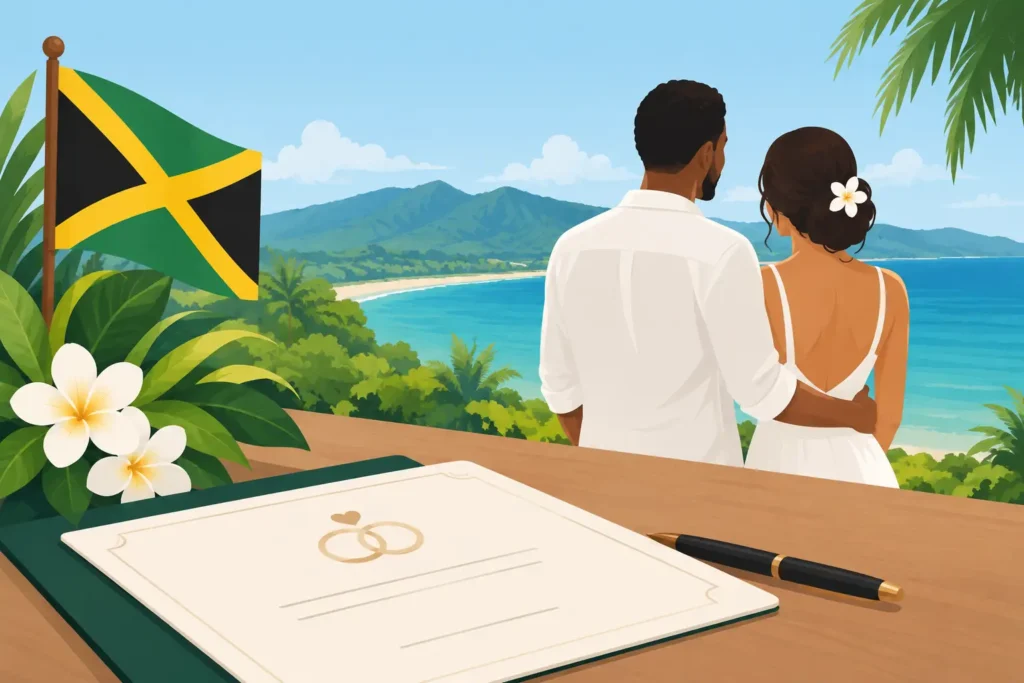
The view may be Caribbean blue, the ceremony may unfold beneath swaying palms, and your guests may arrive ready to celebrate – but a destination wedding is also a legal marriage. This Jamaica marriage license guide helps U.S. couples understand what happens behind the romance, so the paperwork feels as thoughtfully managed as the flowers, menu, and music.
The good news is that Jamaica is widely considered a welcoming choice for couples marrying abroad. There is no residency requirement, and the legal process can be handled before or during your stay with the right preparation. The key is to begin early, provide accurate documents, and work with an authorized Jamaican marriage officer who understands the requirements for international couples.
What makes a Jamaican marriage legal?
To legally marry in Jamaica, both partners must be at least 18 years old, free to marry under Jamaican law, and married by an authorized marriage officer. Your marriage officer plays a central role in the process. They review your documents, help arrange the marriage license application, perform the ceremony, and ensure the marriage is registered.
For most couples traveling from the United States, a Jamaican marriage performed in accordance with local law is legally recognized at home. You do not need to have a separate civil ceremony in the U.S. simply because you married in Jamaica. Still, requirements can vary for name changes, insurance updates, immigration matters, and other personal circumstances. If your situation is complex, confirm your next steps with the relevant agency or a qualified legal professional at home.
A common point of confusion is the difference between a marriage license and a marriage certificate. The license gives you permission to marry. The certificate is the official record issued after your ceremony and registration. You will want copies of the final certificate for practical tasks after the celebration.
Jamaica marriage license guide: documents to prepare
Document requirements can change, and an experienced marriage officer should confirm the current list for your specific circumstances. In general, couples should expect to provide clear copies of valid passports and original or certified copies of birth certificates. The names, dates, and places of birth should be consistent across every document.
If either partner was previously married, additional proof will be required. A divorced person typically needs the final divorce decree. A widow or widower will generally need the former spouse’s death certificate. Couples should not assume a divorce filing, separation agreement, or an earlier name-change document is enough. The final legal record matters.
If any document is in a language other than English, plan for a certified English translation. If names differ across documents because of a prior marriage, adoption, or legal name change, provide the paperwork that explains the difference. Small inconsistencies can slow a process that would otherwise be straightforward.
Keep a digital folder for scanned copies and bring the requested originals or certified copies in your carry-on luggage. It is also wise to give your planner and marriage officer documents well ahead of travel, rather than waiting until guests have arrived and wedding weekend is underway.
A note for couples under 18
Jamaica has additional consent requirements for anyone under 18. Because these cases require more careful handling, families should speak directly with the marriage officer well in advance. For most destination wedding couples, both partners are adults, but it is best to address this early rather than make assumptions.
Timing your license application around your wedding date
Jamaica does not require couples to live on the island before marrying, which is one reason it works so beautifully for a long weekend or a full wedding week. Still, the absence of a residency requirement does not mean the legal process should be left until the last minute.
Your marriage officer can usually begin preparing the application before you arrive once documents have been received and reviewed. Couples often send paperwork several weeks or months before the wedding, allowing time to resolve a missing seal, a hard-to-read scan, or a surname discrepancy without pressure.
Jamaican rules generally allow a marriage to take place after the required licensing process has been completed, often within a short window after the license is issued. Exact processing times, government fees, and administrative procedures can change, particularly around public holidays or busy travel seasons. Build in a cushion. Arriving a few days before the ceremony is more comfortable than scheduling your flight for the evening before you say your vows.
This buffer matters for more than paperwork. It gives you time to settle into the island, greet loved ones, attend a rehearsal, and enjoy the anticipation. A destination wedding should not begin with a search for a printer, a missing document, or a stressful airport delay.
What happens on the wedding day
A legal ceremony can feel every bit as personal as a symbolic one. Your marriage officer will lead the required portion of the service, which may include declarations of consent and the signing of the marriage register. You can still include personal vows, readings, cultural traditions, a meaningful song, or a candle-lighting ceremony around those legal moments.
You will generally need two witnesses who are adults. Many couples choose close friends or family members, turning a legal requirement into a quiet honor for people who have supported their relationship. Confirm witness details with your marriage officer in advance, especially if your guest list is small or you are planning an intimate elopement-style celebration.
After the ceremony, the register is signed by both partners, the witnesses, and the marriage officer. This is one reason a skilled coordination team is so valuable. While you are taking in the moment, someone should be quietly confirming that every signature, document, and official step is completed correctly.
At a property such as The Palm Terrace, couples can pair this practical oversight with the atmosphere they came for: a private setting, sea views, and the freedom to move from vows to cocktails without asking guests to relocate across town. The legal component is handled with care, while the celebration remains unmistakably yours.
Receiving and using your marriage certificate
The certificate available immediately after your ceremony may not be the final certified document you will use for official purposes in the U.S. Your marriage officer can explain how and when to request certified copies once the marriage has been registered. Ask about expected delivery timing before your wedding date, particularly if you need the certificate soon after returning home.
Order more than one certified copy if possible. Banks, government agencies, insurers, and employers may each request documentation, and having extras can save time. Store one copy in a secure place and scan another for your records.
Some U.S. couples may also need an apostille, a form of authentication used when a foreign public document must be accepted by another country or institution. Whether you need one depends on the agency requesting your certificate and what you are using it for. It is not automatically required for every newlywed task, so ask the receiving organization before adding an unnecessary step.
For a name change, begin with the organization whose records matter most to you, often the Social Security Administration in the U.S., then update your passport, driver’s license, bank accounts, and other records as needed. Check each agency’s current requirements. The order and documentation standards can differ.
Let your planning team carry the details
A marriage license is a meaningful legal document, but it should not become the main character in your wedding story. The best destination wedding planning puts legal requirements on a clear timeline, assigns responsibility for each step, and leaves room for the parts you will remember: the first look, the laughter at dinner, and the sound of your guests cheering as the sun begins to set.
When comparing venues or wedding packages, ask who coordinates the marriage officer, how document reviews are managed, what fees are separate from the celebration package, and what happens if travel plans change. Honest answers make it easier to choose a date and move forward confidently.
Your wedding day deserves both the awe-inspiring setting of an island paradise and the quiet reassurance that every essential detail has a place. Prepare the documents early, give yourself time to arrive and breathe, and let the legal steps support the beginning of your marriage rather than distract from it.